National Science Foundation award supports proposed agentic artificial intelligence cybersecurity curriculum
Published: Sep 1, 2026 12:20 PM
By Joe McAdory
 The proposed curriculum will walk students through that problem in stages, organized around four modules: introduction to agentic AI, applying agentic AI to cybersecurity challenges, securing agentic AI system, and a hands-on project requiring students to build, protect and evaluate their own AI agents.
Agentic AI enables software to make decisions and take actions autonomously. Traditional cybersecurity education, however, has focused primarily on securing networks and computer systems.
Farah Kandah, associate professor in the Department of Computer Science and Software Engineering (CSSE), is heading a $299,978 National Science Foundation project to fill that gap.
As principal investigator on “Secure Autonomy in Adversarial Ecosystems: An Agentic AI-based Cyber Defense Education Framework,” Kandah will build a curriculum that trains students to build, apply and secure AI agents against cyberattacks.
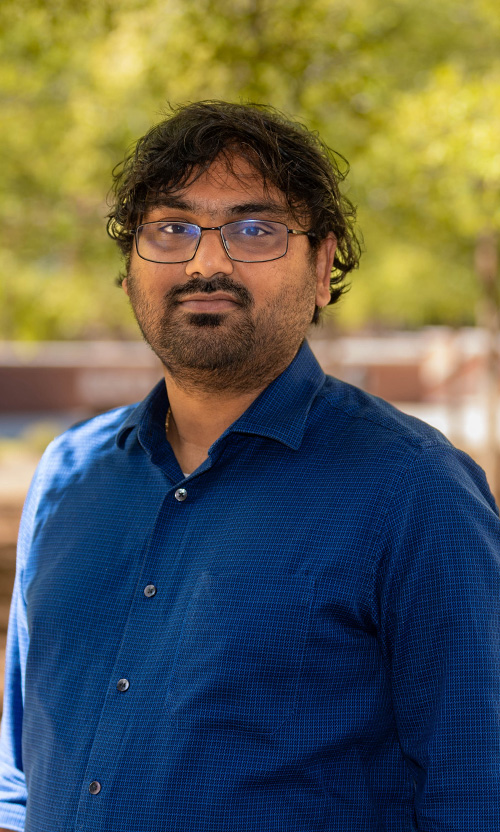
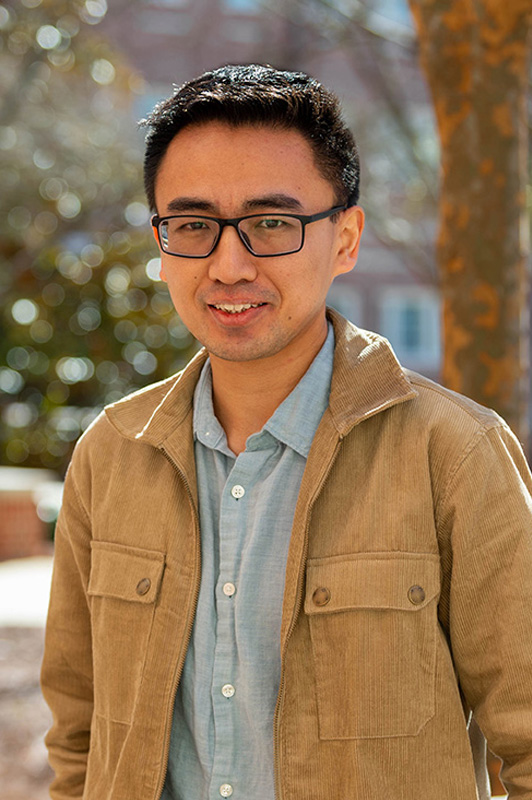
“Agentic AI is on the move. More organizations are adopting AI agents, chatbots and other tools that automate tasks,” said Kandah, joined on the project by CSSE colleagues and co-principal investigators Sathya Aakur, associate professor, and Yazhou Tu, assistant professor. “We can apply agentic AI to solve cybersecurity problems, but the agents themselves have cybersecurity issues. Users can manipulate the agent to create inaccurate results or decisions.”
The proposed curriculum will walk students through that problem in stages, organized around four modules: introduction to agentic AI, applying agentic AI to cybersecurity challenges, securing agentic AI system, and a hands-on project requiring students to build, protect and evaluate their own AI agents.
“We will take the students into the idea of what agentic AI is, and we show them how agentic AI can be applied to these problems,” Kandah said. “Then we’ll teach them that agentic AI has problems by itself. If someone manipulated the agent, how does the agent start behaving badly, avoiding what it’s supposed to do or making bad decisions? At the end of the day, after you learn these three components: you know what an agent is, you know how to apply an agent to a problem, and you know how to defend an agent.”
The proposed curriculum’s scope covers prompt and context manipulation, model and data leakage, agent workflow compromise and AI supply chain risk, the types of vulnerabilities Kandah said are showing up as attackers learn to exploit how agents make decisions and hand off tasks to one another.
Kandah said a key to the curriculum design is flexibility.
“If you want to, you can mix and match these modules,” Kandah said. “It’s not designed as one course that you must take and deploy. Some programs don't have space to fit a whole course. I can take that agentic AI introductory module and teach it over two or three weeks within my current curriculum and just plug it into my course without having to sacrifice a whole course for that component.”
Kandah hopes the course will be offered as a CSSE elective as early as spring 2027, with plans to share the finished materials with other institutions so they can be adapted into existing computer science, cybersecurity, data science or engineering programs.
The project is supported through the Innovation Track under the NSF’s CyberAICorps Scholarship for Service program. The Innovation Track supports projects that enhance preparation of AI and/or cybersecurity professionals. Projects may expand existing educational opportunities, curricula, degree programs, educational pathways, methods and interventions and partnerships among institutions of higher education, government, and employers.
It is also funded through NSF’s EAGER (Early-concept Grants for Exploratory Research) mechanism, which supports exploratory work on emerging research opportunities and innovative ideas that might be considered high risk but have the potential for significant impact.
Media Contact: , jem0040@auburn.edu, 334.844.3447